Removing Deadwood Before Storms Bring It Down
Tree Pruning in Spring for dead or diseased branches threatening structural stability
Dead branches still attached to the tree become projectiles during storms, breaking free under wind load and falling onto roofs, vehicles, or walkways below. Pruning addresses this by removing branches that no longer transport water or nutrients, along with sections showing disease or structural weakness that will fail under stress. JSR Tree Service performs targeted pruning across Spring properties, focusing on cuts that improve long-term tree health rather than just clearing space around structures. The work involves identifying which branches are truly dead versus dormant, then removing them at points that promote proper healing.
The process differs from trimming in that it targets internal canopy health rather than outer growth management. Pruning cuts are made at the branch collar where the limb meets the trunk or a larger branch, allowing the tree to compartmentalize the wound and prevent decay from spreading inward. Mature trees common across Montgomery and Harris County—particularly oaks and pecans—accumulate deadwood as lower branches are shaded out or as disease moves through sections of the canopy.
Request a tree health evaluation to identify which branches should be removed before the next storm season.
How Pruning Supports Long-Term Tree Stability
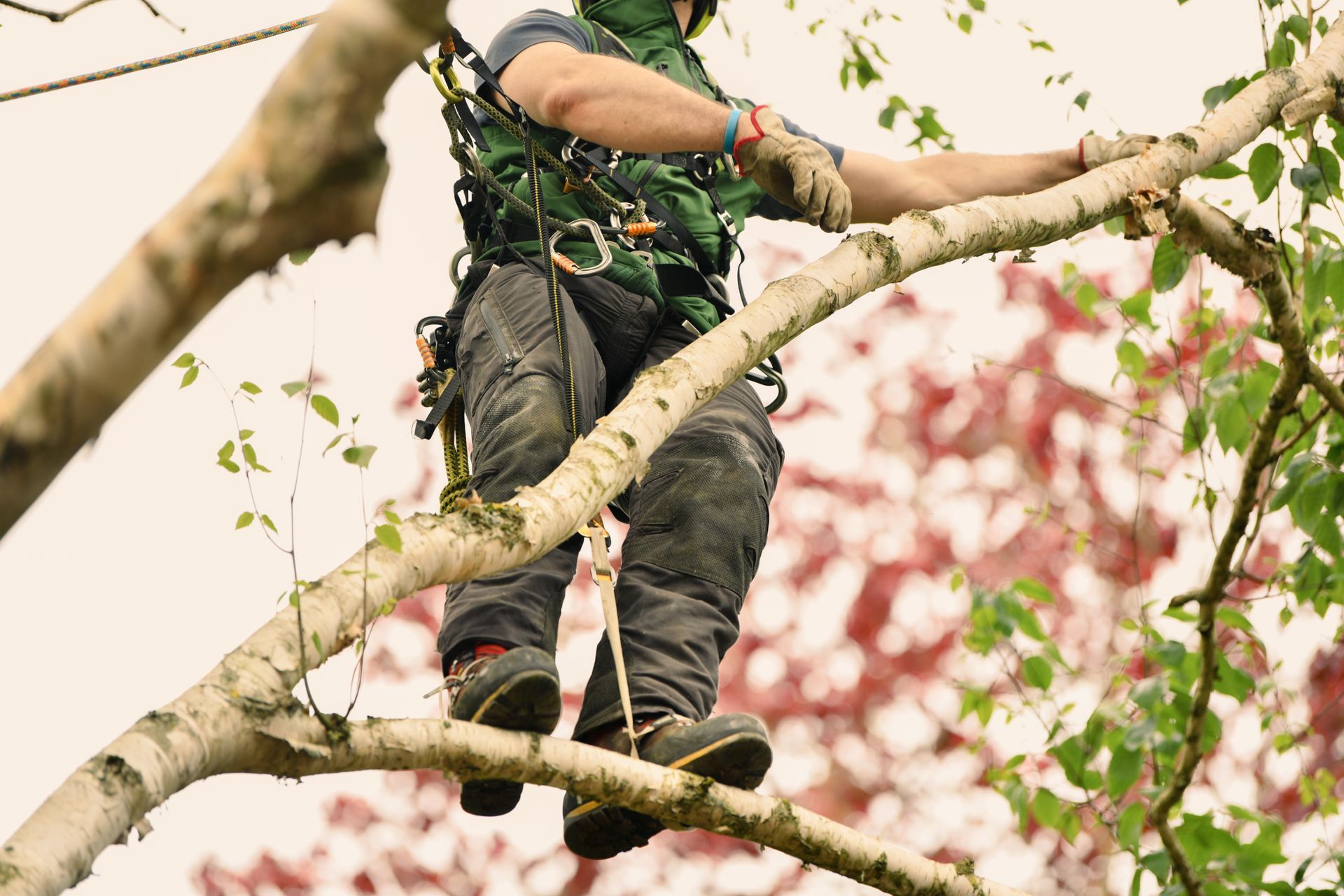
Crews inspect the canopy for branches with no leaf growth, cracked bark, or fungal fruiting bodies that indicate internal decay. Each branch is traced back to its attachment point to determine the correct cutting location, avoiding stubs that trap moisture and invite insect activity. Larger limbs may require rigging to prevent tearing bark as they're lowered, especially when deadwood is brittle and breaks unpredictably.
After pruning is completed, the canopy has visible gaps where dead sections were removed, but the tree's overall structure remains intact. Wind moves through the canopy more easily without catching on heavy dead limbs, reducing the chance of entire sections breaking during gusts. You'll no longer find broken branches in the yard after storms, and the tree directs energy toward healthy growth rather than attempting to sustain dying sections.
Routine pruning every three to five years prevents the accumulation of deadwood that eventually requires more invasive removal. The service focuses on maintaining tree health and does not include aesthetic shaping or clearance trimming near structures, which are addressed through separate trimming work.
Common Questions About This Service
Property owners often need clarification on what pruning removes, how it differs from trimming, and when it should be scheduled.
What's the difference between pruning and trimming?
Pruning targets dead, diseased, or structurally weak branches anywhere in the canopy to improve tree health, while trimming focuses on cutting back outer growth for clearance and aesthetic purposes.
How can you tell if a branch is dead or just dormant?
Dead branches snap cleanly when bent, show no green tissue under the bark when scratched, and lack any bud formation at twig ends, whereas dormant branches remain flexible and show signs of life beneath the surface.
Why does pruning use cuts at the branch collar instead of flush against the trunk?
The branch collar contains cells that seal the wound and compartmentalize decay, so cutting into it or leaving a stub both interfere with the tree's natural defense process and invite rot.
When should mature trees be pruned in Spring?
Late fall through early winter works best because trees are dormant, wounds close more effectively without sap loss, and the absence of leaves makes it easier to identify dead branches throughout the canopy.
Does removing dead branches stress the tree or slow its growth?
Removing deadwood eliminates sections that drain resources without contributing to photosynthesis, so pruning typically improves vigor and allows the tree to focus energy on healthy limbs.
JSR Tree Service provides pruning based on individual tree condition rather than a fixed schedule, with recommendations adjusted for species and health status. Schedule a consultation to determine which trees need attention and what pruning will accomplish for long-term stability.