
Clearing Stumps That Block Landscaping Plans
Stump Grinding in Spring for removing tripping hazards and preventing regrowth after tree removal
A stump left after tree removal becomes a permanent obstacle in the middle of your yard, tripping hazard near walkways, and source of new shoots that keep trying to regrow each season. JSR Tree Service grinds stumps below ground level across residential and commercial properties in Spring, using equipment that reduces the stump and surface roots to wood chips without excavating the entire root ball. The grinding depth reaches several inches below the soil line, low enough that grass or landscaping can be installed over the area without interference from remaining wood.
Grinding eliminates the stump mechanically by cutting it into small chips with a rotating carbide wheel, working from the top down until the wood is gone below grade. Stumps left in place attract termites, carpenter ants, and fungal growth that can spread to healthy trees nearby, particularly in the humid conditions common to Southeast Texas. Removing the stump also stops shoots from sprouting around the base, which require repeated cutting if the stump remains intact.
Schedule grinding as a follow-up to removal or as a standalone service for stumps that have been in place for years.
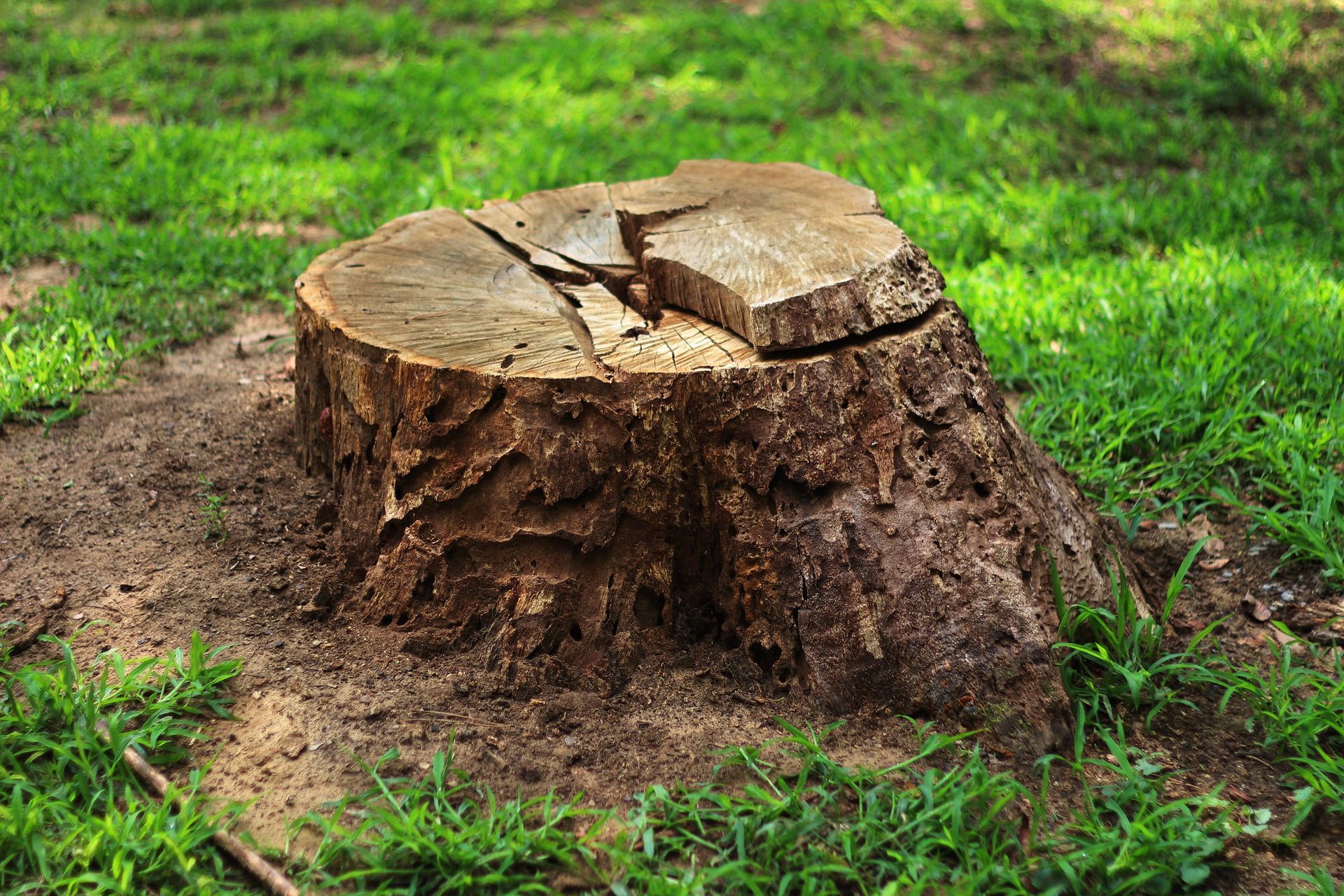
What Changes After the Stump Is Ground Down
The grinder accesses the site and positions over the stump, with the cutting wheel making multiple passes to chip away wood layers until the stump is reduced below the surrounding soil level. Surface roots extending outward are ground down as well, preventing them from interfering with mowing or creating uneven ground. The process generates a large volume of wood chips, which are either spread into the resulting hole or hauled away depending on your preference.
Once grinding is finished, the stump is gone and the area is filled with loose wood chips mixed with soil. The ground is level with the surrounding lawn, eliminating the raised obstacle that blocked mower access or created a tripping hazard near walkways. No new shoots appear at the site because the root system can no longer support regrowth, and pests lose the decaying wood that attracted them in the first place.
Grinding does not remove the entire root system, which decomposes underground over time. If immediate replanting is planned, additional excavation may be needed to remove larger roots, but for most landscaping or turf installation, the ground is ready once the area settles.
What Property Owners Usually Ask
Questions about depth, timing, and what happens to the wood chips come up frequently when scheduling stump grinding services.
How deep does the grinding go below ground level?
Most residential grinding reaches six to twelve inches below grade, deep enough to allow grass or mulch to cover the area without the stump resurfacing as soil settles.
What happens to the wood chips left after grinding?
Chips can be left on-site to fill the hole and decompose naturally, spread as mulch in landscape beds, or hauled away if you prefer a clean site ready for immediate sod or planting.
Can you grind a stump that's been in the ground for years?
Yes, older stumps grind just as effectively as fresh ones, though they may be harder and take slightly longer to process if the wood has dried and hardened over time.
Will grinding damage my lawn or underground utilities?
The grinder remains on the surface and does not dig or excavate, so surrounding turf is minimally disturbed, but utility lines should be marked in advance if the stump is near buried infrastructure.
How soon after tree removal should the stump be ground?
Grinding can happen immediately after removal or be scheduled separately, with no disadvantage to waiting unless the stump is in the way of planned construction or landscaping work.
JSR Tree Service provides stump grinding individually or bundled with removal services for properties clearing multiple trees. Contact us to schedule grinding and receive an estimate based on stump size and site access.